Wondering whether Fremont can actually support the way you work every day? If your week includes video calls, focused work blocks, and maybe a couple of office commute days, the neighborhood can look like a strong fit at first glance. The real answer is a little more nuanced, and it depends less on the Fremont name and more on the specific home, block, and backup work options around you. Let’s dive in.
Why Fremont Appeals to Remote Workers
Fremont stands out for buyers who want an urban Seattle neighborhood with multiple ways to work. You have a mix of housing types, a solid lineup of cafes and coworking spaces, and practical transit and bike connections to South Lake Union and downtown. For remote and hybrid workers, that combination can make daily life easier.
At the same time, Fremont is not a one-size-fits-all neighborhood. Natural light, noise levels, and layout can change a lot from one property to the next. If you are buying with a work-from-home lifestyle in mind, that variation matters just as much as location.
Fremont Housing and Home Office Fit
The City of Seattle’s Fremont historic survey shows a broad mix of residential forms, including single-family homes, duplexes, apartment houses, condominiums, townhouses, and mixed-use residential projects. That means you are not shopping one uniform housing style. You are comparing very different living experiences within the same neighborhood.
King County’s 2025 area report also shows that Fremont changes by pocket. The northern portion is more higher-density and townhome-oriented, the heart of Fremont includes the neighborhood’s single-family homes, and the southern portion transitions toward retail, apartment, and manufacturing uses. In some Fremont subareas, townhome-style residences make up 56% or even 81% of improvements.
For you as a buyer, the key takeaway is simple: a great work-from-home setup in Fremont is possible, but you need to evaluate each property on its own merits. A detached home, a townhouse, and a condo can each work well, but they will likely offer very different levels of privacy, window exposure, and separation between work and living space.
How Older Homes May Feel
Fremont’s documented older Seattle house types include Four-Square and Craftsman Bungalow forms. The historic survey notes features like bay windows, porches, dormers, and multi-pane windows. Those details can create appealing spaces with character and strong daylight potential.
That said, older homes may also have more segmented room layouts. If you want a dedicated office with a door, that can be a plus. If you prefer a wide-open floor plan with a simple desk zone, you may need to think more carefully about how the home actually functions during a full workday.
How Townhomes and Condos May Feel
Newer development in Fremont has largely included mixed-use buildings, apartments, condominiums, and townhouses. These homes may offer more efficient layouts for a desk setup and cleaner separation between sleeping, living, and working areas. In some cases, they can be a great match for hybrid buyers who want low maintenance and easy access to neighborhood amenities.
Still, brightness and livability vary widely. Orientation, setbacks, and adjacent buildings can make one newer unit feel open and bright while another feels more enclosed. You cannot assume a newer home will automatically work better for remote work.
Natural Light Is a Property-by-Property Issue
If natural light affects your mood, focus, or camera setup, Fremont requires a careful tour. The neighborhood includes historic masonry structures, wood-frame warehouses, Craftsman residences, mid-century multifamily buildings, and newer townhouse development. That mix creates a lot of visual character, but it also means daylight conditions are highly specific to the unit.
In practical terms, one Fremont block may feel very different from the next. A home office in an older house may have better window features and more personality, while a newer townhome may deliver a more efficient layout but less predictable light depending on neighboring structures. The neighborhood offers options, but not consistency.
What to Check During a Fremont Tour
If work-from-home performance is high on your list, it helps to tour with a clear framework. Instead of asking only whether the home looks nice, focus on how it will function from 9 to 5.
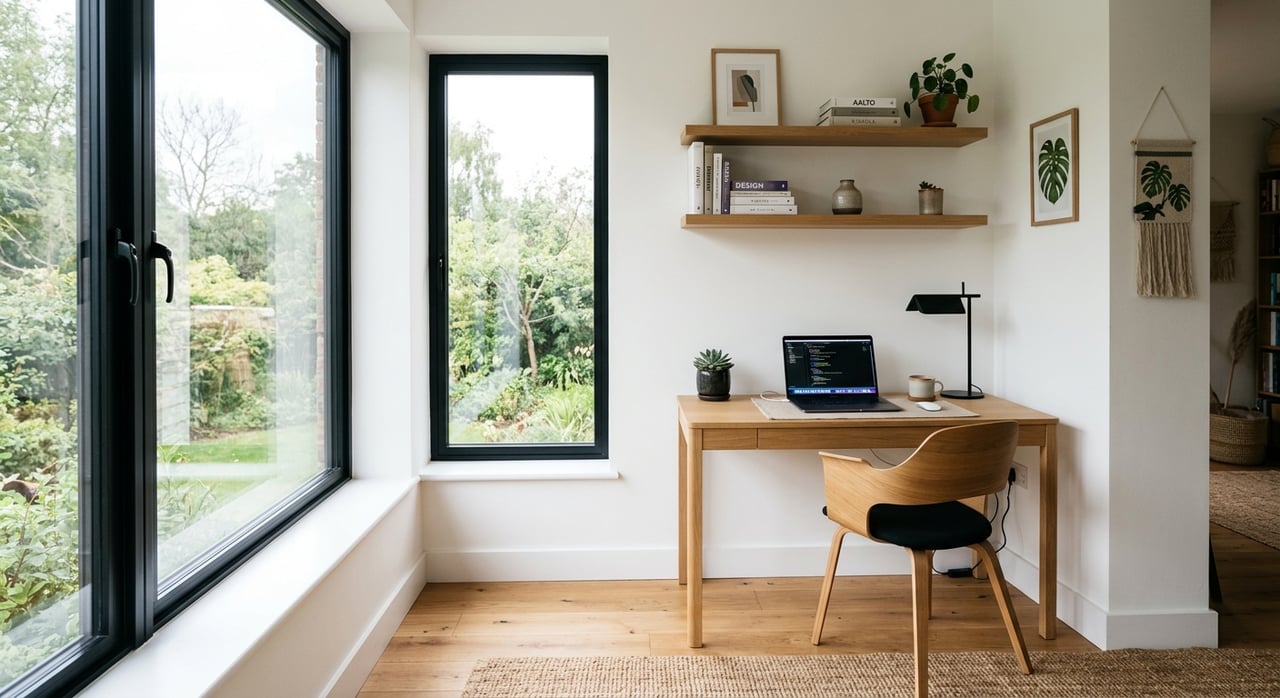
Daylight and Desk Checklist
- Visit during the hours you expect to work
- Note glare, shade, and direct sun in likely desk areas
- Confirm whether a desk can sit near an exterior wall
- Check for enough outlet access where you would work
- Ask whether the office has its own window or only borrowed light
- Test how your video background and lighting would look on camera
Noise and Comfort Checklist
- Listen for street noise during the workday
- Check sound from nearby units, alleys, or shared walls
- Notice any mechanical equipment noise
- Ask about the internet setup and whether fiber is available
- Review the HVAC setup for all-day comfort
- Confirm whether there is a true office room or only a flex nook
These details matter because Fremont’s housing stock is so varied. A property that looks great in listing photos may not feel great after a week of calls and focused work.
Coworking and Coffee Make Hybrid Life Easier
One of Fremont’s biggest strengths is its third-place work infrastructure. If you do your best work with occasional scenery changes or need a backup plan outside your home, the neighborhood gives you options.
Current coworking choices include ActivSpace Fremont, which offers 24/7/365 access and customizable spaces. The Doc Freeman Building offers coworking with gigabit fiber, conference rooms, a breakroom, and a patio overlooking Lake Union. ShiftUp on N 36th St adds flexible memberships, a rooftop deck, a conference room, and a kitchen. Kiln Fremont is also planned at 837 N 34th St, with projected opening in late 2026 and features like private offices, phone booths, deep-work rooms, and meeting space.
For coffee-based work sessions, Fremont also has a strong lineup. Fremont Coffee Company operates from a historic house with a wrap-around porch and in-house roasting. Other options named in the research include Caffe Vita in the historic Herzig Building, Lighthouse Roasters in a Craftsman building at 43rd and Phinney, Stone Way Cafe, and Milstead & Co. on N 34th St.
What does that mean for you? If your ideal week includes one or two focused days at home, a café break, and the occasional coworking session, Fremont supports that rhythm well. The best fit will still depend on your preferences for noise, seating, and how long you like to stay in one place.
Fremont Commutes for Hybrid Schedules
If you are not fully remote, Fremont’s access to South Lake Union and downtown is a meaningful advantage. King County Metro Route 40 provides a direct transit link with stops at Fremont Ave N & N 34th St, Westlake Ave N & Thomas St in South Lake Union, and downtown Seattle stops along 3rd Ave.
A current weekday timetable includes a trip leaving Fremont at 6:16 a.m., reaching South Lake Union at 6:27 a.m., and downtown at 6:37 a.m. That suggests about 11 minutes to South Lake Union and roughly 21 minutes to downtown on that trip, though actual travel times can vary.
Biking is also a practical option. The Westlake protected bike lane creates a 1.2-mile flat connection between the Fremont Bridge and South Lake Union, and the Burke-Gilman Trail runs through Fremont and is described by Seattle Parks as a popular route for commuters as well as walkers, runners, cyclists, and skaters.
For a hybrid buyer, this creates flexibility. If you only need to be in an office a few days a week, Fremont’s bus-and-bike network can reduce the hassle of commuting without requiring you to live right next to your workplace.
Home Business Rules to Keep in Mind
If you plan to run a side business from home, Fremont can still work, but you should verify the rules early. Seattle allows home occupations in residential settings as long as they do not interfere with neighbors and comply with city limits related to signage, noise, odors, and use of the dwelling.
If you are considering client visits, additional equipment, or business activity beyond typical remote work, it is smart to confirm both Seattle home-occupation rules and any HOA restrictions before you buy. This is especially important in condos and townhomes where building rules may affect how you use the space.
So, Is Fremont Right for You?
Fremont is a strong option if you want an urban neighborhood that supports work-from-home life beyond your front door. The combination of varied housing, coworking access, coffee shops, and practical connections to South Lake Union and downtown makes it especially appealing for remote and hybrid professionals.
The catch is that Fremont rewards careful buyers. If you need uniform layouts, predictable daylight, or guaranteed quiet, you will want to tour closely and compare homes block by block. When you approach it with a clear process, Fremont can offer a flexible and well-connected setup that works for the way you actually live and work.
If you want help comparing condos, townhomes, and single-family homes in Fremont through a work-from-home lens, Zac Lee offers data-backed guidance, clear communication, and a practical buying process built for Seattle neighborhoods.
FAQs
Is Fremont a good Seattle neighborhood for remote workers?
- Fremont can be a strong fit for remote workers because it offers varied housing, several coworking and coffee options, and practical bus and bike access to South Lake Union and downtown Seattle.
Do Fremont homes usually have good natural light for a home office?
- Natural light in Fremont depends heavily on the specific property, since the neighborhood includes older houses, townhomes, condos, apartments, and mixed-use buildings with very different window patterns and surroundings.
What housing types can you find in Fremont, Seattle?
- Fremont includes single-family homes, duplexes, apartment houses, townhouses, condominiums, and newer mixed-use residential buildings, according to the City of Seattle and King County materials in the research.
Is Fremont convenient for commuting to South Lake Union?
- Yes, Fremont has a practical connection to South Lake Union through King County Metro Route 40, and the Westlake protected bike lane also provides a flat 1.2-mile bike connection from the Fremont Bridge to South Lake Union.
Are there coworking spaces in Fremont for hybrid workers?
- Yes, current options in Fremont include ActivSpace Fremont, the Doc Freeman Building, and ShiftUp, with Kiln Fremont planned to open in late 2026.
Can you run a home business from a Fremont residence?
- Seattle allows home occupations in residential settings if they do not interfere with neighbors and meet city limits on things like signage, noise, odors, and use of the dwelling, but you should also confirm any HOA rules before buying.
What should you check when touring a Fremont home for remote work?
- Focus on daylight during working hours, desk placement, noise, internet setup, HVAC comfort, office separation, and the distance to nearby cafes, coworking, transit, or bike routes you may use during the week.