Thinking about a heat pump for your Seattle home, but not sure where to start? You’re not alone. Between equipment types, costs, and changing rebates, it can feel confusing fast. In this guide, you’ll get a clear, local overview of what heat pumps cost in Seattle, how they perform in our climate, where to find incentives, and what buyers and sellers should verify before closing. Let’s dive in.
Why heat pumps fit Seattle
Seattle’s winters are generally mild, with many days in the 30s to 40s. That is ideal for modern heat pumps, which move heat rather than generate it. Because they transfer heat, not burn fuel, they can deliver efficient heating in winter and cooling in summer.
You’ll see strong performance here, especially with newer models that maintain capacity in colder weather. Many homes can heat primarily with a heat pump during a Seattle winter. Backup heat is often used only during rare cold snaps.
Heat pump types to consider
Ducted air-source systems
A ducted air-source heat pump connects to your home’s central ductwork. It can replace or pair with an existing furnace and works well if your ducts are in good condition. Look for efficiency ratings like SEER or SEER2 for cooling and HSPF or HSPF2 for heating.
Ductless mini-splits
Ductless mini-splits use small indoor units mounted on walls or ceilings, connected to an outdoor compressor. They are popular in older Seattle homes without ducts, such as many Ballard and Capitol Hill properties. Multi-zone systems let you set different temperatures in different rooms, which helps fine-tune comfort.
Cold-climate models
Cold-climate air-source heat pumps are engineered to hold output during lower temperatures. While Seattle’s extreme lows are rare, these models offer extra assurance for cold snaps and can reduce reliance on backup heat.
Ground-source (geothermal)
Ground-source heat pumps use the stable temperature of the earth for exceptional efficiency. They are more complex and have much higher upfront costs. Site conditions determine feasibility, so you would need a specialist assessment before considering one.
Costs in Seattle: what to expect
Typical installation ranges
Every home is different, but these are useful ballpark ranges for installed costs:
- Ductless mini-split, per zone: about $3,000 to $8,000.
- Ductless multi-zone (2–4 zones): about $7,000 to $15,000.
- Central air-source replacement with existing ducts: about $6,000 to $16,000.
- Ground-source (geothermal): typically $25,000 to $60,000 or more.
Get at least two to three local bids and request a professional Manual J load calculation to size the system correctly.
What influences your price
Costs rise with the number of zones, new or repaired ductwork, panel upgrades, and high-end cold-climate models. Site access, removing old equipment, and adding insulation or air sealing can also change the final price.
Operating costs and payback
If you currently use electric resistance heat, a heat pump can often cut heating energy use by 30 to 50 percent or more. If you have a high-efficiency gas furnace, savings depend on local gas and electric rates, and payback can be longer. A simple payback is often 3 to 8 years when replacing electric resistance heat, and 7 to 15 or more years when replacing newer high-efficiency gas equipment. Incentives can shorten the timeline.
Lifespan and maintenance
Most systems last 12 to 20 years with regular service. Plan for annual or biennial maintenance, including filter checks, refrigerant checks, and cleaning of drains and coils. If you have ducts, schedule periodic inspections and sealing to reduce losses.
Performance, comfort, and resale benefits
Comfort and indoor air quality
Heat pumps provide steady, even temperatures. Many use variable-speed, inverter-driven compressors that adjust output to match your home’s needs. You’ll often notice quieter operation and fewer hot-and-cold swings. Ductless systems also allow room-by-room control, which can help tame drafty corners in older homes.
Efficiency and emissions
Because heat pumps move heat with a coefficient of performance (COP) greater than one, they are more efficient than electric resistance heat. In Washington, where the grid often has a relatively low carbon intensity, electrifying your heating can reduce on-site fossil fuel use.
Resale and marketability
For buyers, a modern heat pump can signal lower operating costs and built-in cooling. For sellers, recent permits, warranties, and maintenance records make a strong case for value. If you can show before-and-after utility bills that demonstrate lower energy use, that can further support your listing.
Rebates and incentives: where to look
Incentive programs change frequently, so confirm current rules before you sign a contract. Start with these resources and verify eligibility, required equipment ratings, and application steps:
- Seattle City Light residential rebates and home electrification programs.
- City of Seattle and King County programs, including income-qualified weatherization and electrification support.
- Washington State Department of Commerce energy programs that coordinate state or federal funding.
- Federal incentives under recent legislation, including tax credits for qualifying high-efficiency heat pumps and state-administered rebates. Review IRS guidance for current credit names, caps, and eligibility.
- Aggregators such as DSIRE and ENERGY STAR for technology primers and up-to-date incentive listings. Always confirm details with the issuing agency.
Tip: Gather model numbers and contractor details before applying, since many programs require specific efficiency ratings like SEER2, HSPF2, or cold-climate performance metrics.
Do you need backup heat in Seattle?
Many homes do well with a heat pump as the primary heat source in Seattle’s climate. Some systems include electric resistance backup, and some homes keep a gas furnace in a hybrid setup. Cold-climate models reduce the need for backup, but your installer should explain how often auxiliary heat might run during the coldest days.
Ducted or ductless for your home?
If you already have good ducts, a central air-source system can be a straightforward swap. If you live in an older craftsman in Ballard or Queen Anne without ducts, a ductless multi-zone setup can be efficient and less invasive. Newer townhomes in Magnolia or Capitol Hill often use compact ducted or ductless configurations to provide both heating and cooling.
What buyers should verify during inspection
Use this quick checklist during due diligence:
- Documentation and permits
- Installation date, contractor name and license, mechanical and electrical permits, and inspection sign-offs.
- Model numbers and serials, plus itemized invoices.
- Manufacturer warranties and any transferable coverage.
- System condition
- Service records from the last 12 months.
- Refrigerant type. Avoid older systems dependent on phased-out refrigerants.
- Any major repairs, compressor replacements, or known leaks.
- Proper sizing and distribution
- Evidence of a Manual J load calculation.
- If ducted, ask about duct sealing, insulation, and any recent testing.
- If ductless, confirm the number and placement of indoor heads for balanced comfort.
- Electrical and backup
- Any electrical panel upgrades for the install.
- Type of backup heat and how often it runs in winter.
- Noise and placement
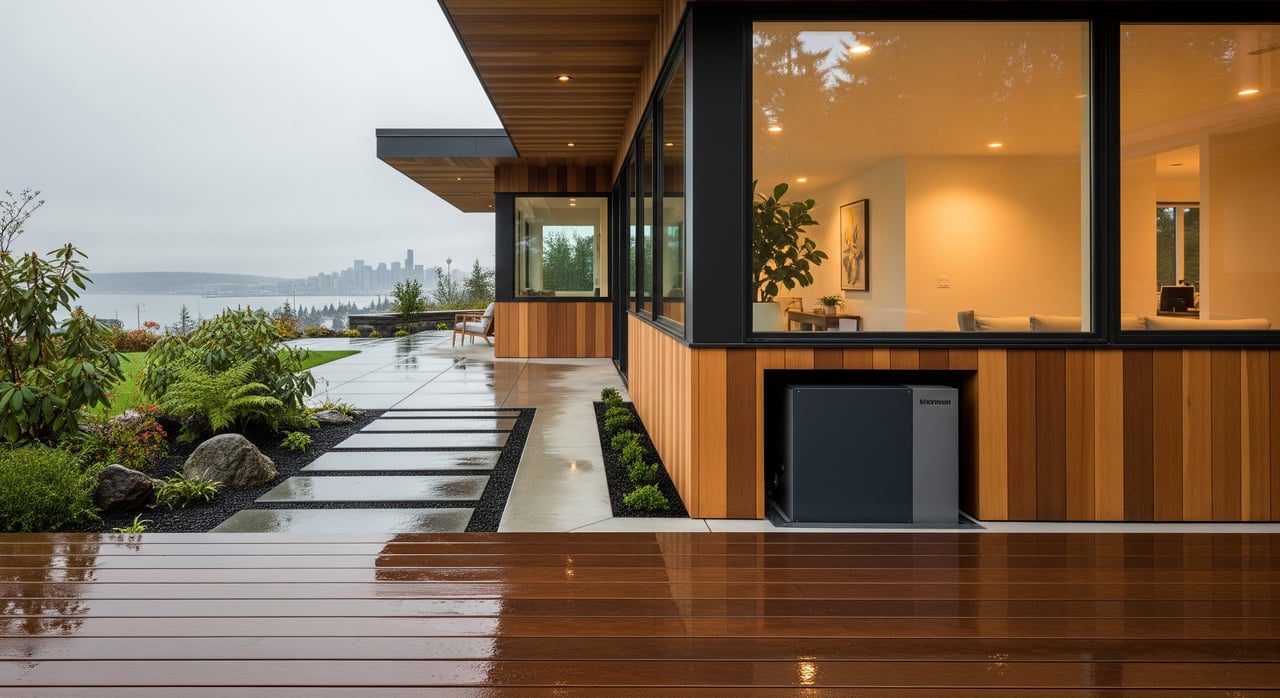
- Outdoor unit location, clearances, and vibration isolation.
- Indoor unit noise levels and homeowner feedback on comfort.
- Energy use
- Recent utility bills, especially if the system was installed within the last year.
What sellers should prepare before listing
Create a simple “heat pump packet” for buyers:
- Copies of permits, inspection approvals, and contractor licenses.
- Model numbers, manuals, and warranty registrations.
- Maintenance records and any repair invoices.
- Evidence of proper sizing, such as a Manual J report.
- If you used rebates, include application confirmations and final approvals.
- Recent utility bills that illustrate energy use and seasonal costs.
Choosing the right contractor and size
Proper sizing and installation quality drive comfort and savings. Ask for a Manual J load calculation and request bids that explain equipment ratings, including SEER2 for cooling and HSPF2 for heating. If you plan to add more indoor zones later, confirm compatibility now.
For ducted systems, address duct sealing and insulation to avoid performance losses. For ductless systems, confirm head placement for balanced airflow and simple maintenance.
Permits and licensing in Seattle
Most installations require mechanical and electrical permits. Licensed HVAC and electrical contractors typically handle this process. You can pull permits as a homeowner, but it is less common. Always verify licensing, insurance, and references, and ask how the contractor will document the install for future resale.
Planning your budget and next steps
- Get multiple local bids that include Manual J calculations, efficiency ratings, and any ductwork or electrical upgrades.
- Ask contractors to outline eligible rebates and provide model-specific data to support applications.
- Schedule regular maintenance to protect performance and lifespan.
- If selling, organize your heat pump packet early so buyers can review it during the first showing.
Ready to talk through how a heat pump might affect your home search or sale in central Seattle neighborhoods like Queen Anne, Capitol Hill, Ballard, Magnolia, or Belltown? Reach out to Zac Lee for data-backed guidance and a clear next step.
FAQs
Will a heat pump work well in Seattle’s climate?
- Yes. Seattle’s mild winters favor heat pump performance, and many homes can heat primarily with a heat pump, with backup used only during rare cold snaps.
What is the difference between ducted and ductless heat pumps?
- Ducted systems connect to central ductwork for whole-home heating and cooling, while ductless mini-splits use indoor heads for targeted zones and are ideal for homes without ducts.
How much does a heat pump cost to install in Seattle?
- Typical ranges are about $3,000 to $8,000 per ductless zone, $7,000 to $15,000 for multi-zone ductless, $6,000 to $16,000 for central air-source, and $25,000 to $60,000 or more for geothermal.
How long does payback take for a heat pump upgrade?
- If replacing electric resistance heat, simple payback is often 3 to 8 years; replacing a newer high-efficiency gas furnace can be 7 to 15 or more years, depending on energy prices and incentives.
Where can I find rebates for heat pumps in Seattle?
- Check Seattle City Light, City of Seattle and King County programs, Washington State Department of Commerce, IRS guidance for federal tax credits, and aggregators like DSIRE, then confirm details with the issuing agency.
Do I need backup heat with a heat pump in Seattle?
- Often no, but many homes include electric resistance backup or maintain a hybrid setup. Cold-climate models can reduce how often backup runs in the coldest weather.
What should buyers and sellers document about an installed heat pump?
- Keep permits, inspection approvals, model numbers, warranties, service records, evidence of a Manual J calculation, and recent utility bills to support performance and resale value.